

AI Visibility & Answer Engine Optimization (AEO) for Medical and Dental Practice Websites in 2026
AI Visibility and Answer Engine Optimization (AEO) are critical for healthcare providers as over half of internet searches are voice-based and AI models now guide 80-90% of online information discovery. Unlike traditional SEO, which focuses on ranking in a list of links, AEO focuses on being the definitive answer provided by AI assistants like ChatGPT, Siri, and Google’s AI Overviews.
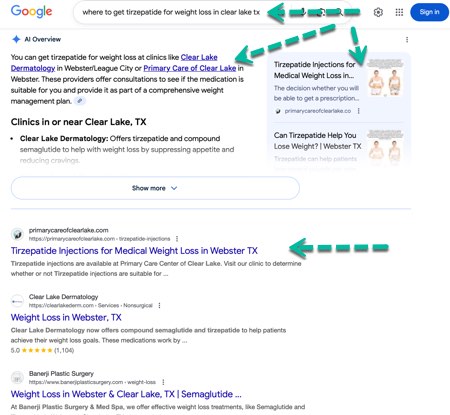
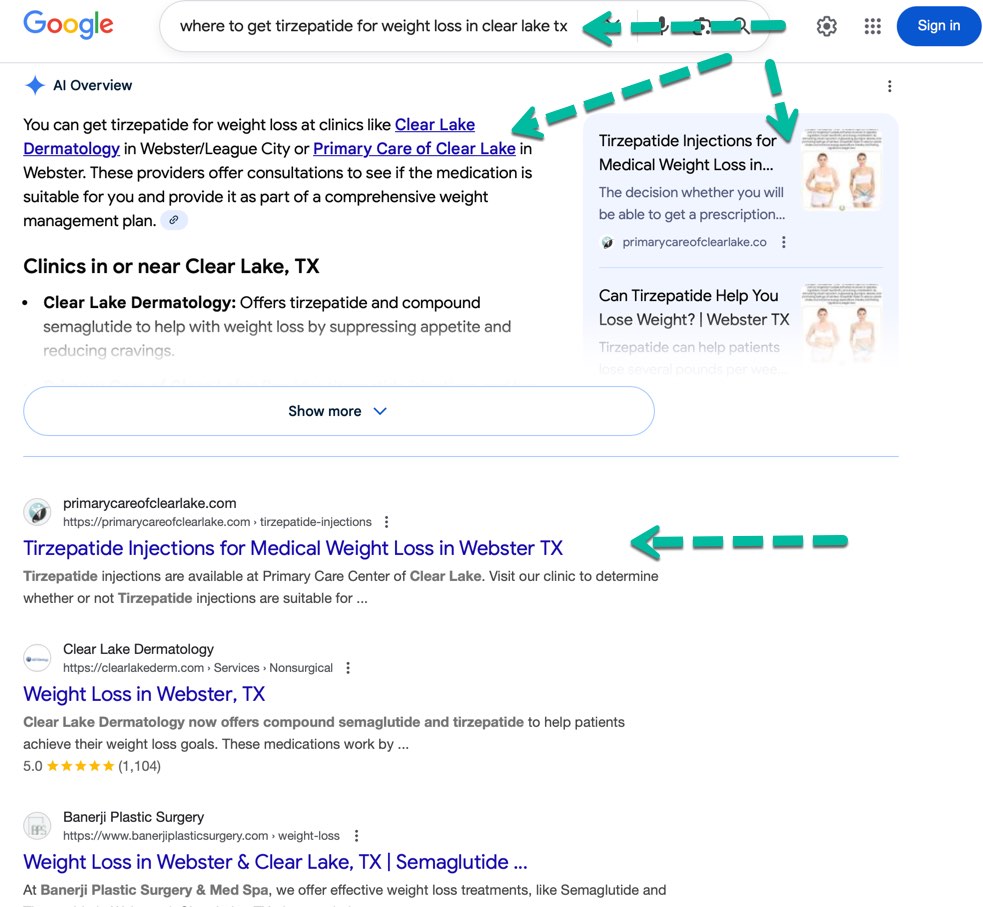
Example of AI Visibility & Answer Engine Optimization (AEO) AI Overviews – This an an example of a primary care practice. A potential patient is “speaking” to a device in long sentences. If your website is designed to “help” patients with useful, in depth information, with infographics, FAQs, Schema markup, high website speed load time, non-plagiarized content, you are likly to be included in ChatGPT and Google Gemini AI overviews.
Core Strategies for 2026 Healthcare AEO
- Adopt Structured, AI-Ready Content: Shift from long-form medical articles to “bite-sized” content chunks (1-3 short paragraphs) that cover a single idea. This allows Large Language Models (LLMs) to easily ingest and quote your specific expertise.
- Prioritize “Answerable” Formats: Use question-based headers (e.g., “How can I lower my blood pressure?”) rather than abstract terms (e.g., “Hypertension Management”). Robust FAQ sections and Q&A formats are prioritized by AI for extraction.
- Strengthen the “Digital Entity”: Ensure your practice’s Name, Address, and Phone (NAP) details are perfectly synchronized across your website, Healthgrades, WebMD, and Google Business Profile. Inconsistencies cause AI systems to lose confidence in recommending you.
- Implement Advanced Schema Markup: Use detailed Schema.org markup for doctors, locations, services, and procedures. This acts as “subtitles for AI,” providing explicit clues about the meaning of your content.
- Maximize E-E-A-T (Experience, Expertise, Authoritativeness, Trust):
- Publish content reviewed or led by clinicians with visible credentials.
- Cite primary sources like peer-reviewed journals and government health sites.
- Highlight human elements, such as clinician videos and patient success stories, to provide empathy that AI cannot replicate.
Technical and Multimodal Optimization
- Voice-First Readiness: Optimize for natural language used in voice search (e.g., “Who is the best hip doctor near me open now?”).
- Multimodal Search: Label all images, videos, and infographics with descriptive alt-text and captions. AI algorithms in “reads” visual assets to understand context almost as well as text.
- Feed AI-Specific Protocols: Implement standard protocols such as
llms.txtfiles to guide AI crawlers directly to your most authoritative content. - Disclose AI Usage: Transparency is a major trust signal in 2026. Explicitly state when AI was used in content creation and highlight where a human physician verified the medical accuracy.
Tracking Success
Traditional “clicks” are less relevant in an environment where AI provides “zero-click” answers. Success should be measured by:
- Brand Mentions: How often your practice is cited by name in AI summaries.
- Conversion Rate: Integration of tools like real-time booking, which AI systems reward for providing a “no dead-end” user journey.
- AI Sentiment: Monitoring how AI assistants describe your
 Send Text
 How may I help you?